
Small Business Ideas with Low Investment for Beginners
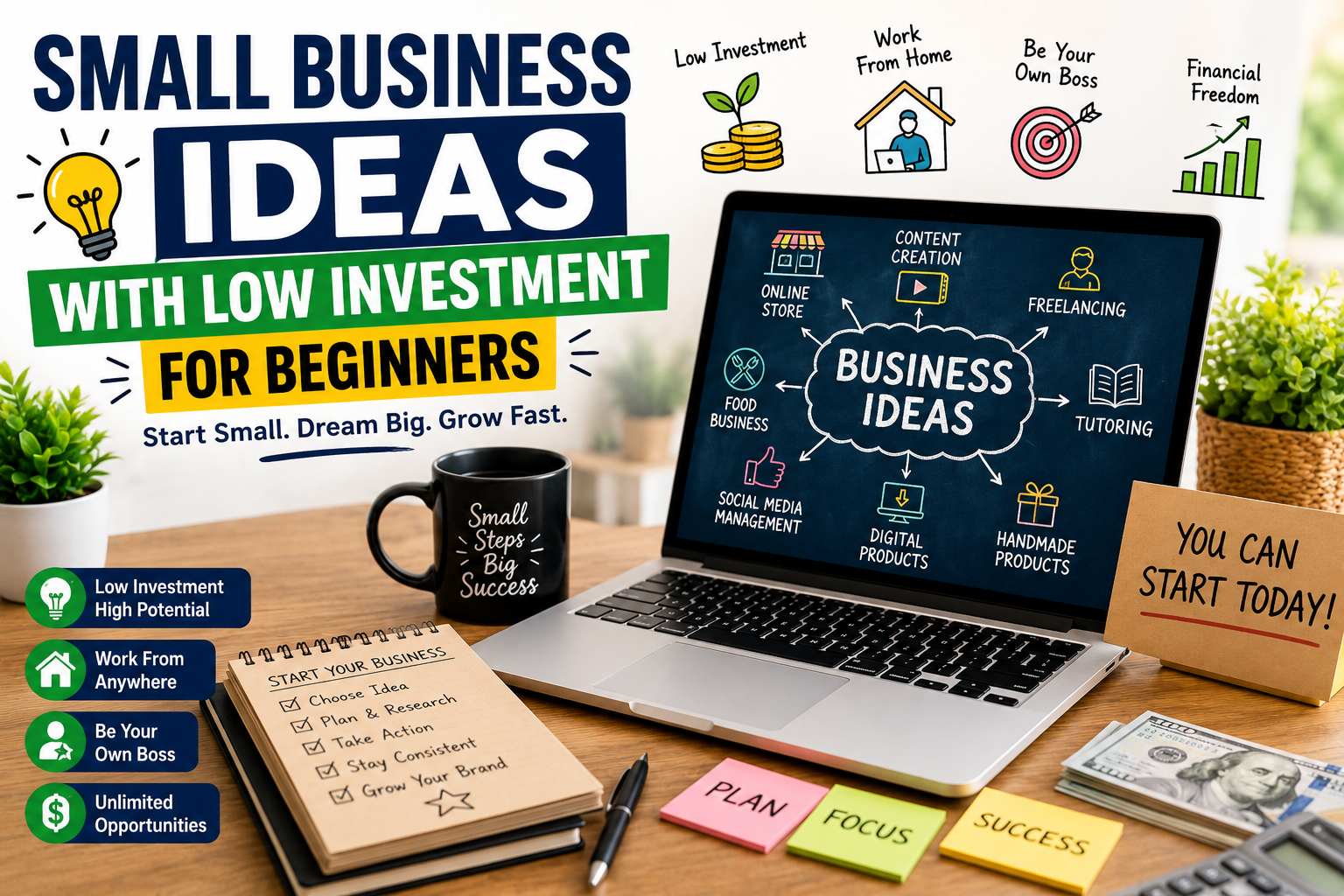
online business ideas for beginners not always require a large office, expensive equipment, or a huge budget. Many successful businesses begin with a simple idea, a small investment, and consistent effort. Today, beginners have more opportunities than ever because the internet, digital tools, social media, and online marketplaces make it easier to reach customers from home.
If you are new to business, choosing the right idea is important. The best small business ideas with low investment are usually simple to start, easy to test, and flexible enough to grow slowly. You can begin part-time, learn from your first customers, improve your service or product, and increase your income step by step.
In this guide, we will explore practical low investment business ideas for beginners, along with useful tips to choose the right one learn digital skills.
Why Low Investment Business Ideas Are Good for Beginners
Low investment businesses are helpful because they reduce financial risk. When you are just starting, you may not know which idea will work best. Instead of spending a lot of money at the beginning, you can test your idea with a smaller budget.
Another benefit is flexibility. Many low investment businesses can be started from home, online, or part-time. This makes them suitable for students, job holders, parents, freelancers, and people who want to build an extra income source.
Low investment businesses also help beginners learn real business skills. You learn how to communicate with customers, set prices, promote your offer, manage time, handle feedback, and improve quality. These skills are useful for every future business.
1. Freelance Services
Freelancing is one of the most practical business ideas for beginners because you can start with skills you already have. If you can write, design, edit videos, manage social media, create websites, enter data, translate content, or provide virtual support, you can offer freelance services.
The investment is usually low. You may only need a laptop, internet connection, and some time to build your portfolio. Even if you do not have previous client work, you can create sample projects to show your ability.
Beginners should start with one clear service. For example, instead of offering “digital services,” you can offer blog writing, logo design, short video editing, social media captions, or basic website updates. A clear service is easier to sell.
2. Social Media Management
Many small businesses want to grow on social media but do not have time to manage their pages properly. This creates an opportunity for beginners who understand posting, captions, basic design, content planning, and customer engagement.
As a social media manager, you can help businesses create posts, schedule content, reply to comments, improve profile appearance, and plan weekly content. You can start with local shops, salons, restaurants, coaches, real estate agents, or service businesses.
This business does not require a big investment. Basic design tools, content ideas, and communication skills are enough to start. Over time, you can offer advanced services like ads management, content strategy, and analytics reporting.
3. Home-Based Food Business
A home-based food business can be a good option for people who enjoy cooking or baking. You can sell homemade snacks, cakes, lunch boxes, frozen food, desserts, or healthy meals.
This business can start small. You can first sell to friends, family, neighbors, and local customers. Social media can help you display your menu, share photos, take orders, and collect reviews.
The important thing is quality, hygiene, packaging, and consistent taste. Food businesses can grow through repeat customers if people trust your quality and service DailyViewMag business guides.
Before starting, check local food safety rules and requirements in your area. This helps you run the business more professionally.
4. Online Reselling
Online reselling means buying products from suppliers and selling them to customers through social media, marketplaces, or your own website. Popular product categories include clothing, accessories, beauty products, home items, stationery, phone accessories, and small gadgets.
Beginners can start with limited stock to test demand. Instead of buying many products at once, choose a small product range and see what customers like
Good photos, clear descriptions, fast replies, and honest pricing are important in reselling. Customer trust matters a lot because people want to know they will receive the right product on time.
This is a flexible business that can grow slowly as you understand demand and build a customer base.
5. Digital Products
Digital products are a strong low investment business idea because you create the product once and sell it many times. Examples include ebooks, templates, planners, checklists, worksheets, design files, Notion templates, Canva templates, and budget sheets.
This business is good for creative people, writers, designers, teachers, and anyone who can solve a specific problem through a downloadable product.
For example, you can create a small business planner, social media content calendar, student study planner, resume template, or monthly budget tracker. These products do not require shipping or inventory.
The key is to create something useful and easy to understand. Simple digital products often work well when they solve a clear problem.
6. Online Tutoring
If you are good at a subject or skill, online tutoring can be started with low investment. You can teach school subjects, languages, computer skills, business basics, design, digital marketing, coding, or exam preparation.
Online tutoring can be done through video calls, recorded lessons, or group sessions. You only need a stable internet connection, basic teaching material, and a clear subject focus.
Beginners should choose a specific audience. For example, instead of saying “I teach math,” you can offer “basic math tutoring for middle school students” or “English speaking practice for beginners.” Specific offers are easier to promote.
Tutoring can also grow into a larger education business if you create courses, worksheets, and recorded lessons.
7. Content Writing
Content writing is a good business idea for people who enjoy research and writing. Businesses need blog posts, website content, product descriptions, social media captions, emails, and articles.
You can start by learning basic SEO writing, grammar, formatting, and topic research. A few sample articles can help you build a portfolio.
The investment is low because you mainly need writing skills, internet access, and a computer. Beginners can find clients through freelance platforms, LinkedIn, Facebook groups, local businesses, or direct outreach.
To stand out, choose a niche such as business writing, tech writing, travel writing, health content, ecommerce descriptions, or blog writing for service websites.
8. Handmade Products
If you are creative, handmade products can become a small business with low investment. You can sell candles, jewelry, art prints, handmade soaps, gift boxes, crochet items, customized mugs, or decorative items.
This business works well when products look attractive and have a clear target audience. Good packaging and product photography can make a big difference.
Beginners should start with a small collection instead of too many items. Test which products people like, then improve quality and design.
Handmade businesses can sell through social media, local markets, gift shops, or online platforms.
9. Cleaning Services
Cleaning services can be started with basic supplies and local promotion. You can offer home cleaning, office cleaning, move-in cleaning, move-out cleaning, deep cleaning, or small commercial cleaning services.
This business is practical because cleaning is always needed. Many people and businesses prefer hiring reliable cleaners instead of doing everything themselves.
Beginners can start with a small service area and a few basic packages. Professional behavior, punctuality, trust, and good results matter more than expensive branding in the beginning.
As the business grows, you can hire workers, buy better equipment, and offer more specialized services.
10. Mobile Car Wash or Detailing
A mobile car wash or basic detailing service can be a good low investment business if you live in an area where people need convenient vehicle cleaning. Instead of customers coming to a shop, you provide the service at their home, office, or parking area.
Basic equipment, cleaning supplies, towels, and water access may be enough to start small. Later, you can add interior cleaning, polishing, waxing, and premium detailing packages.
This business depends on quality, convenience, and repeat customers. If customers are happy, they may book regularly or recommend your service to others.
11. Virtual Assistant Services
A virtual assistant helps business owners with online tasks such as email management, appointment scheduling, research, data entry, customer support, file organization, and basic admin work.
This is a low investment business because many tasks require organization and communication rather than expensive tools. You can work from home and support clients remotely.
Beginners can offer a simple monthly package for small business owners, freelancers, coaches, or content creators. As you gain experience, you can specialize in areas like ecommerce support, real estate admin, or social media assistance.
12. Blogging
Blogging is a long-term business idea that can be started with low investment. You can create a website around topics like business, technology, AI, education, lifestyle, finance basics, travel, or productivity.
A blog can earn through ads, affiliate links, sponsored posts, digital products, and services. However, blogging requires patience. It may take time to get traffic and income.
Beginners should focus on helpful, low competition topics. Instead of targeting broad keywords, write about specific questions and beginner-friendly guides. Consistent publishing and internal linking can help a blog grow over time check small business tax basics.
13. Event Planning for Small Events
Small event planning can be started with organization skills, creativity, and local networking. You can help plan birthdays, small business events, baby showers, family gatherings, workshops, or community events.
This business does not always require a big budget because you can coordinate vendors, decoration, invitations, schedules, and arrangements. You can earn through service charges or event packages.
Beginners should start with small events and take good photos for their portfolio. Client reviews are very important in this business.
14. Personal Fitness or Wellness Coaching
If you have knowledge in fitness, yoga, nutrition basics, or wellness habits, you can start a coaching business with low investment. You can offer online sessions, workout plans, habit tracking, or beginner fitness guidance.
This business requires trust and responsibility. You should only give advice within your knowledge and avoid making unrealistic claims.
Beginners can start with basic fitness support, accountability coaching, or simple wellness routines. Social media can help you share tips and attract interested clients.
15. Graphic Design Services
Graphic design is a useful business idea because many businesses need logos, flyers, social media posts, banners, presentations, thumbnails, and basic branding material.
Beginners can start with easy design tools and improve skills with practice. A portfolio is very important. You can create sample designs for imaginary brands or redesign existing ideas for practice.
Start with simple packages such as social media post design, business card design, or flyer design. Once you improve, you can offer brand identity, website graphics, and marketing materials.
How to Choose the Best Small Business Idea
Choosing the right business depends on your skills, interest, budget, time, and local demand. Do not choose an idea only because it looks popular. Choose something you can actually continue.
Ask yourself:
- What skills do I already have?
- How much money can I invest safely?
- Can I start this business part-time?
- Who will buy this product or service?
- Can I promote it online or locally?
- Can this business grow over time?
The best idea is one that matches your current situation and has real demand.
Tips to Start a Low Investment Business Successfully
Start small and test first. Do not spend money on unnecessary things before confirming demand. Create a simple offer, promote it to a small audience, and collect feedback.
Keep your pricing clear. Beginners often underprice their work, but you should still charge fairly for your time and effort.
Use free or affordable tools where possible. Social media, basic design tools, spreadsheets, and free business platforms can help you begin without large expenses.
Focus on customer experience. Good communication, honest delivery, and quality work can bring repeat customers and referrals.
Common Mistakes Beginners Should Avoid
One mistake is waiting for the perfect time. Many people keep planning but never start. It is better to start small and improve with experience.
Another mistake is copying others without understanding the market. What works for someone else may not work for you. Study the idea, but create your own approach.
Beginners should also avoid spending too much money on branding, tools, or inventory before getting customers. A simple start is better than a costly failed launch check small business tax basics.
Final Thoughts
Starting a small business is possible even with limited money. The key is to choose a practical idea, start with simple steps, and improve as you learn. Freelancing, digital products, tutoring, reselling, content writing, cleaning services, virtual assistance, and blogging are all useful options for beginners.
The best small business ideas with low investment are not always the most glamorous. They are the ideas that solve real problems, match your skills, and can grow with consistency.
Choose one idea, test it, learn from feedback, and keep improving. A small beginning can become a strong business when you stay focused and patient.
FAQs
What is the best small business to start with low investment?
Freelancing, online tutoring, content writing, social media management, digital products, and online reselling are some of the best low investment business ideas for beginners.
Can I start a small business from home?
Yes, many small businesses can be started from home, including freelancing, tutoring, blogging, digital products, handmade products, virtual assistance, and online reselling.
How much money do I need to start a small business?
It depends on the business idea. Some service-based businesses can start with very little money, while product-based businesses may require a small budget for materials or inventory.
Which business is good for students?
Students can start tutoring, content writing, freelancing, graphic design, social media management, blogging, or selling digital products because these options can be managed part-time.
How can I promote a small business with low budget?
You can promote your business through social media, local groups, word of mouth, free business listings, referrals, and helpful content.
Is online business better than offline business for beginners?
Online business can be easier for beginners because it usually requires less investment and can be managed from home. However, offline businesses can also work well if there is local demand.


One thought on “Small Business Ideas with Low Investment for Beginners”