
Best Business Tools for Small Businesses to Save Time and Grow
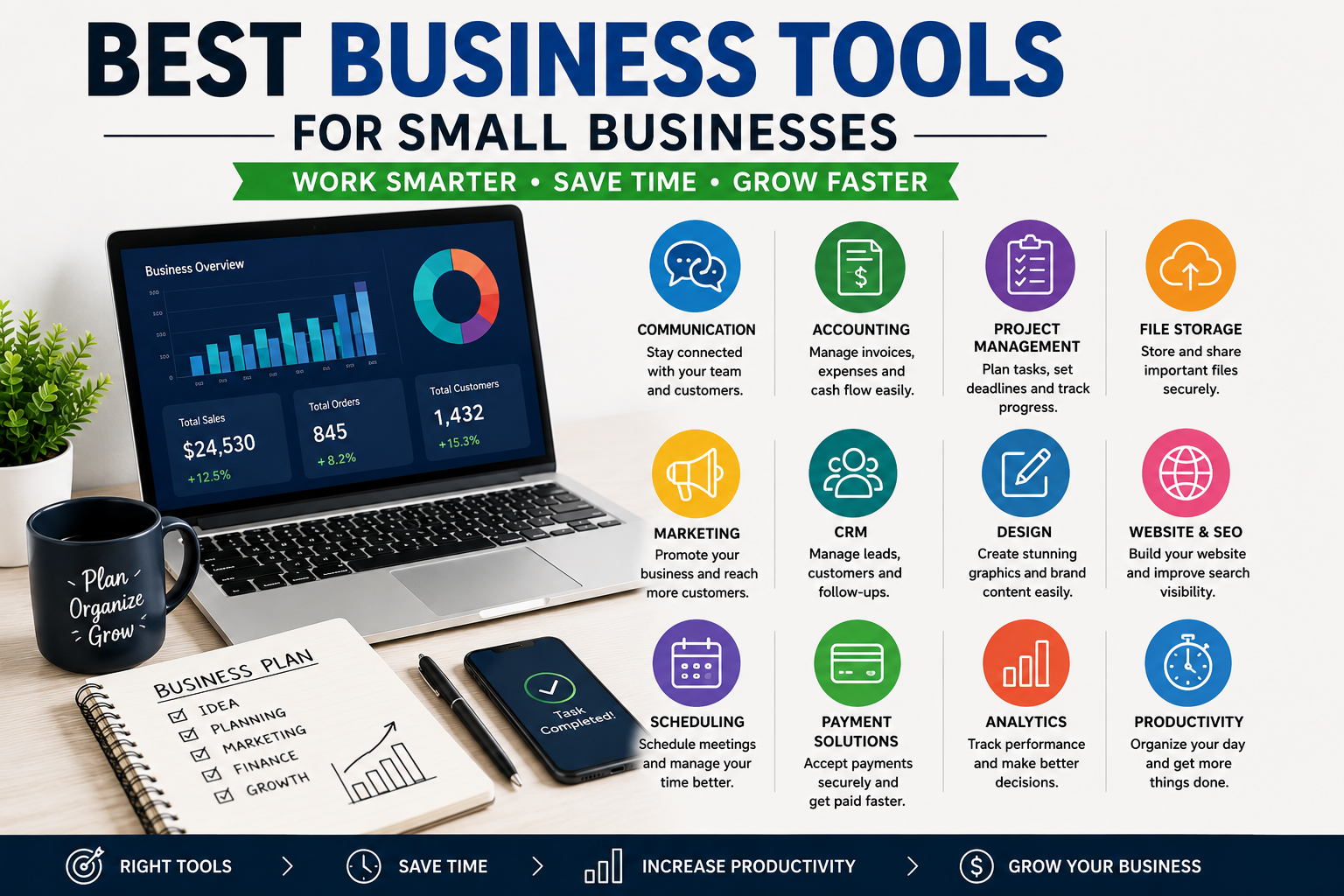
online business ideas for beginners is exciting, but it also comes with many daily responsibilities. Business owners need to manage customers, payments, marketing, communication, documents, team tasks, social media, and long-term planning. Without the right system, even simple work can become stressful and time-consuming.
This is where business tools for small businesses can make a real difference. The right tools help business owners save time, stay organized, reduce manual work, improve customer service, and make better decisions. Whether you run an online business, local service company, freelance setup, small store, or home-based business, simple digital tools can make your work easier.
The good thing is that small businesses do not need expensive or complicated software from the beginning. Many useful tools offer free or affordable plans, which makes them suitable for beginners and growing businesses.
Why Small Businesses Need Digital Tools
Small businesses often have limited time, budget, and staff. One person may handle sales, customer support, marketing, bookkeeping, and daily operations. When everything is done manually, mistakes become common and productivity becomes slow.
Digital business tools help by organizing important work in one place. For example, you can use tools to schedule meetings, track expenses, create invoices, manage social media posts, store documents, and communicate with customers.
Another benefit is consistency. When you have a proper system, you are less likely to forget tasks or miss important follow-ups. This creates a more professional experience for customers.
For beginners, tools are not just about technology. They are about building better business habits.
1. Communication Tools
Good communication is important for every small business. Whether you are talking to customers, suppliers, team members, or freelancers, your communication needs to be clear and organized.
Communication tools can help you manage emails, team chats, customer messages, and business updates. They reduce confusion and keep important conversations easy to find.
For a small business, professional communication creates trust. Customers feel more confident when you reply on time, share clear information, and keep conversations organized Google Workspace for business.
Beginners can start with simple email tools, messaging platforms, or team chat apps. The goal is to avoid mixing personal and business conversations too much. A separate business communication system makes your work look more professional.
2. Accounting and Invoicing Tools
Money management is one of the most important parts of running a small business. You need to track income, expenses, invoices, taxes, payments, and profit. If you do not manage money properly, your business can face problems even if you are getting customers.
Accounting and invoicing tools help small business owners create invoices, record expenses, track payments, and understand cash flow. These tools are especially useful for freelancers, service providers, online sellers, consultants, and small agencies.
A simple invoicing tool can save time and make your payment process more professional. Instead of sending informal payment messages, you can send a proper invoice with details, due date, and payment instructions QuickBooks accounting software.
Beginners should track every business expense from the start. Even small expenses matter when you want to understand your real profit.
3. Project Management Tools
Project management tools help you organize work, deadlines, responsibilities, and progress. They are useful whether you work alone or with a small team.
For example, if you are managing a website, social media campaign, customer order, client project, or content plan, a project management tool can help you divide work into smaller tasks.
You can create task boards, assign work, set deadlines, add notes, and track what is completed. This avoids confusion and keeps everyone on the same page.
Small businesses often lose time because tasks are not clearly written. A project management tool solves this by making work visible. Even a basic “To Do, In Progress, Done” system can improve productivity.
4. File Storage and Document Tools
Every business has important files. These may include invoices, contracts, images, product details, reports, customer information, marketing material, and business plans. If files are stored randomly, they become difficult to find later.
Cloud storage and document tools help you save, organize, and share files safely. You can access files from different devices and share them with team members or clients when needed.
These tools are useful for both online and offline businesses. A cleaning company, ecommerce store, digital agency, tutor, consultant, or freelancer can all benefit from proper file organization.
Beginners should create folders from the start. For example, you can make folders for invoices, clients, marketing, website content, social media designs, and business documents.
5. Marketing Tools
Marketing tools help small businesses reach more people and promote their products or services. These tools can support email marketing, social media scheduling, content planning, SEO, analytics, and customer engagement.
For small businesses, marketing is not only about posting ads. It is about staying visible, building trust, and giving useful information to potential customers.
Social media tools can help you plan posts in advance. Email tools can help you send updates, offers, and newsletters. SEO tools can help you understand what people are searching for. Analytics tools can show which content or campaign is working better.
Beginners should not use too many marketing tools at once. Start with the platforms where your customers are most active, then slowly improve your marketing system.
6. Customer Relationship Management Tools
Customer Relationship Management tools, also called CRM tools, help you manage customer information, leads, follow-ups, and sales conversations.
For example, if someone asks about your service today but does not buy immediately, a CRM tool can remind you to follow up later. This is very useful because many small businesses lose customers simply because they forget to reply or follow up.
CRM tools can store names, emails, phone numbers, notes, order history, and customer status. This helps you provide better service and build stronger relationships.
Beginners can start with a simple spreadsheet or a basic CRM tool. The important thing is to keep customer details organized and follow up professionally.
7. Design Tools
Small businesses need visuals for social media, websites, flyers, brochures, presentations, ads, product images, and blog graphics. Hiring a designer for every small task can be expensive, especially in the beginning.
Design tools help business owners create simple and professional visuals using templates. You can design social media posts, posters, business cards, logos, thumbnails, and promotional images without advanced design skills.
Good design can make your business look more trustworthy. Customers often judge a business by how professional its visuals appear.
Beginners should keep designs clean. Use simple colors, readable fonts, and clear messages. Avoid overcrowding designs with too much text or too many elements Canva design tools.
8. Website and SEO Tools
A website is important for many small businesses because it works like an online home for your brand. It can show your services, products, contact details, customer reviews, location, and business information.
Website tools help you create, manage, and improve your site. SEO tools help you understand keywords, website performance, search visibility, and content opportunities.
For small businesses, SEO is useful because customers often search online before buying. If your website has helpful content and proper structure, it can attract visitors over time.
Beginners should focus on basic website improvements first. Make sure the website loads fast, works on mobile, has clear pages, and includes helpful content.
9. Scheduling and Calendar Tools
Scheduling tools help small businesses manage appointments, meetings, deadlines, bookings, and reminders. They are useful for consultants, service providers, tutors, coaches, beauty businesses, cleaning companies, agencies, and freelancers.
Instead of going back and forth with customers about available times, a scheduling tool can allow people to book a time based on your availability.
Calendar tools also help you avoid missed meetings and late work. You can set reminders for calls, delivery dates, content publishing, payment follow-ups, and business tasks.
For beginners, a simple calendar setup is enough. Use it consistently and review your schedule daily.
10. Payment Tools
Payment tools make it easier to receive money from customers. Depending on your country and business type, you may use bank transfer, card payment, online payment gateway, mobile wallet, or marketplace payment system.
A smooth payment process improves customer experience. If customers find it difficult to pay, they may delay or cancel the purchase.
Small businesses should choose payment methods that are secure, easy to use, and trusted by customers. Always keep payment records organized.
Beginners should also clearly mention payment terms, refund rules, and due dates to avoid confusion.
11. Analytics Tools
Analytics tools help business owners understand what is happening in their business. They can show website visitors, social media performance, email results, ad performance, customer behavior, and sales data.
Without analytics, you may guess what is working. With analytics, you can make better decisions based on real numbers.
For example, if one blog post brings more traffic than others, you can create more content around similar topics. If one product gets more views but fewer sales, you can improve pricing, images, or description.
Beginners should not worry about advanced data in the beginning. Start by checking simple metrics like website traffic, page views, inquiries, sales, and customer response.
12. Productivity Tools
Productivity tools help business owners manage time, notes, checklists, routines, and daily priorities. Running a small business can become overwhelming if you do not organize your day properly.
These tools can help you create daily task lists, save ideas, set reminders, manage habits, and focus on important work.
Productivity is not about working all day. It is about working on the right tasks at the right time. A tool can support you, but your planning and discipline matter more best work from home tools.
Beginners should start each day with three main priorities. This simple habit can improve focus and reduce stress.
How to Choose the Right Business Tools
There are many business tools available, but not every tool is necessary for every business. Choosing too many tools can create confusion and extra cost.
Before choosing a tool, ask yourself:
- What problem does this tool solve?
- Is it easy to use?
- Is the free plan enough for now?
- Will it save time or create more work?
- Does it fit my business size?
- Can I upgrade later if needed?
- Is customer data safe?
A good business tool should make your work easier, not more complicated.
Simple Tool Setup for Small Business Beginners
If you are just starting, you can keep your setup simple. You may need:
- One tool for email and communication
- One tool for file storage
- One tool for task management
- One tool for invoices or money tracking
- One tool for design
- One tool for scheduling
- One tool for website or analytics
This basic setup is enough for many small businesses in the beginning. You can add more tools as your business grows.
Common Mistakes to Avoid
One common mistake is paying for tools before understanding your needs. Many beginners buy premium tools but do not use most features. Start with free or low-cost options first.
Another mistake is using too many platforms for the same task. For example, using three different task tools can create confusion. Choose one system and use it consistently.
Small business owners should also avoid ignoring security. Use strong passwords, protect customer data, and keep business files organized.
Final Thoughts
The right tools can help a small business work faster, look more professional, and grow with better organization. From communication and accounting to marketing, file storage, CRM, design, and project management, digital tools can save time and reduce daily stress.
However, tools alone do not build a business. They support your work, but you still need clear goals, customer focus, consistent effort, and smart decision-making DailyViewMag business guides.
Start with simple business tools for small businesses, use them properly, and improve your system as your business grows.
FAQs
What are business tools for small businesses?
Business tools for small businesses are digital platforms or software that help owners manage communication, accounting, marketing, projects, files, customers, payments, and productivity.
Do small businesses need paid tools?
Not always. Many small businesses can start with free or affordable tools. Paid tools are useful when your work grows and you need advanced features.
Which business tools should beginners use first?
Beginners should start with tools for communication, file storage, task management, invoicing, design, scheduling, and basic analytics.
Can business tools help save time?
Yes, business tools can save time by automating tasks, organizing work, reducing manual errors, and keeping important information in one place.
Are online business tools useful for local businesses?
Yes, local businesses can use online tools for bookings, customer communication, marketing, payments, reviews, and file management.
How do I choose the best tool for my business?
Choose a tool based on your business problem, budget, ease of use, security, and whether it helps you work more efficiently.



One thought on “Best Business Tools for Small Businesses to Save Time and Grow”