Blue Whale Size: How Big Is the Largest Animal on Earth?
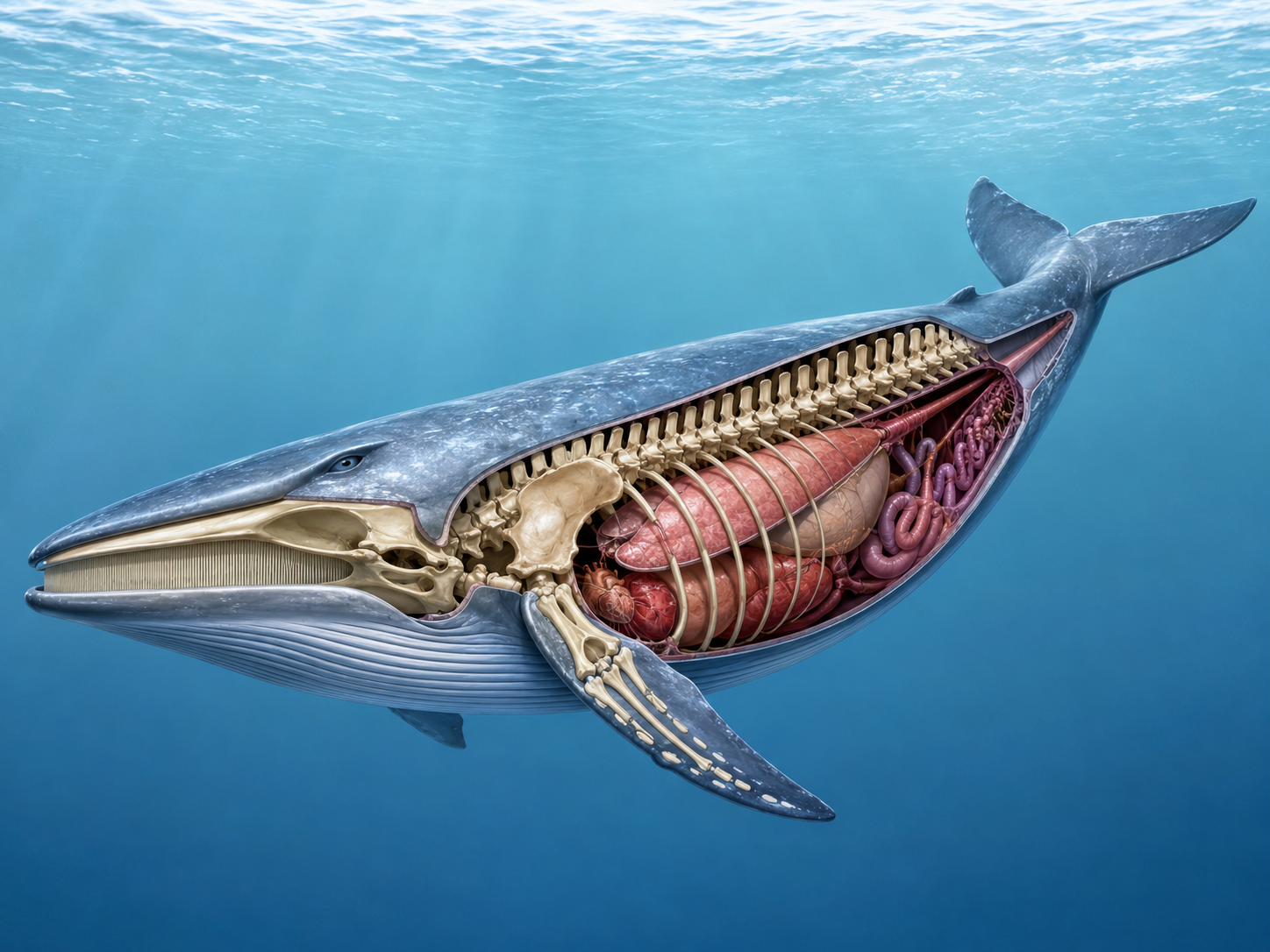
The blue whale is the largest animal ever known to have lived on Earth. When people search for blue whale size, they usually want to understand how long, heavy, and massive this ocean giant really is. The answer is amazing: a blue whale can grow longer than a basketball court, weigh more than many large vehicles combined, and have body parts that are larger than some land animals.
Blue whales are not only big compared with today’s animals. They are bigger than any dinosaur scientists have discovered. Even the largest land animals in history cannot match the total body mass of a fully grown blue whale. This makes the blue whale one of the most fascinating creatures in the natural world.
This guide explains blue whale size in simple terms, including length, weight, heart size, tongue size, baby blue whale size, and easy comparisons with humans, buses, elephants, and buildings.
What Is the Average Blue Whale Size?
An adult blue whale usually grows to around 80 to 100 feet long, but some individuals can reach even larger sizes. In meters, that is around 24 to 30 meters. Some sources mention blue whales reaching up to 110 feet in length.
Their weight is just as impressive. A large adult blue whale can weigh around 100 to 200 tons, depending on age, sex, region, and body condition. Some estimates place very large blue whales at over 300,000 pounds.
Females are usually slightly larger than males. This is common in some whale species and helps females support pregnancy and nursing NOAA blue whale facts.
Blue Whale Size Quick Facts
| Feature | Approximate Size |
|---|---|
| Adult length | 80 to 100+ feet |
| Adult weight | 100 to 200 tons |
| Largest reported length | Up to around 110 feet |
| Baby blue whale length | Around 23 to 26 feet |
| Baby blue whale weight | Around 2 to 3 tons |
| Heart size | About the size of a small car |
| Tongue size | Can weigh as much as an elephant |
| Main food | Krill |
These numbers help explain why blue whales are called the largest animals on the planet.
How Long Is a Blue Whale?
The length of a blue whale is one of its most impressive features. A large blue whale can be about 100 feet long, which is longer than three school buses placed end to end.
To imagine this more clearly, think of a basketball court. A standard NBA basketball court is 94 feet long. A large blue whale can be longer than that. This means if a blue whale were placed on a basketball court, it could stretch from one end to the other and still have part of its body extending beyond the court.
This huge length helps the blue whale move efficiently through the ocean. Its body is long, streamlined, and powerful, allowing it to travel long distances during migration.
How Much Does a Blue Whale Weigh?
A blue whale’s weight is even harder to imagine than its length. A large adult can weigh more than 100 tons and sometimes close to 200 tons. That means one blue whale can weigh as much as dozens of elephants.
An African elephant may weigh around 5 to 7 tons. A large blue whale can weigh as much as 25 to 30 elephants or more, depending on the comparison.
This weight is possible because water supports the whale’s massive body. On land, an animal this heavy would struggle under its own weight. In the ocean, buoyancy helps support the blue whale and allows it to move gracefully despite its size.
Blue Whale Size Compared to Humans
Compared with humans, the blue whale is almost unbelievable. An average adult human is around 5 to 6 feet tall. A blue whale can be more than 15 times longer than a person is tall.
If several people stood head to toe, it would take many adults to match the length of one blue whale. Even a baby blue whale is longer than most cars and heavier than many small trucks.
This comparison helps show just how massive the species is. Humans may be intelligent and advanced, but in terms of physical size, we are tiny next to a blue whale.
Blue Whale Size Compared to a Bus
A school bus is often around 35 to 45 feet long. A full-grown blue whale can be as long as two or three buses.
This is one of the easiest comparisons for readers because most people have seen a bus in real life. Imagine two large buses placed in a line. A blue whale can still be longer.
This makes the whale’s movement through water even more impressive. Despite being bus-sized several times over, blue whales can swim smoothly through the ocean with powerful tail movements.
Blue Whale Size Compared to an Elephant
Elephants are the largest land animals alive today, but they are much smaller than blue whales. One elephant may weigh several tons, but a blue whale can weigh as much as many elephants combined.
Even parts of a blue whale can be compared with elephants. The tongue of a blue whale can weigh as much as an elephant. That single fact shows the scale of the animal better than almost any comparison.
This is also why blue whales need huge amounts of food during feeding seasons. Their bodies are enormous, and they need energy to support migration, movement, growth, and survival.
How Big Is a Blue Whale Heart?
The blue whale has the largest heart of any animal. It is often described as being about the size of a small car. This giant heart helps pump blood through the whale’s massive body National Park Service blue whale facts.
Because the whale is so large, its circulatory system must support organs, muscles, flippers, tail, and brain across a body that may be close to 100 feet long. The heart must be powerful enough to keep blood moving through this enormous system.
The idea of a heart the size of a small car may sound unbelievable, but it makes sense when you consider the size of the entire animal.
How Big Is a Blue Whale Tongue?
A blue whale’s tongue is also huge. It can weigh as much as an elephant. This is one of the most famous facts about blue whale size.
The tongue helps the whale during feeding. Blue whales are baleen whales, which means they do not have teeth like sharks or dolphins. Instead, they have baleen plates that help filter food from the water.
When feeding, a blue whale takes in a large amount of water filled with krill. Then it pushes the water out through its baleen plates while keeping the krill inside. Its large mouth and tongue help make this feeding process possible.
How Big Is a Baby Blue Whale?
A baby blue whale, called a calf, is already enormous at birth. A newborn blue whale can be around 23 to 26 feet long and weigh around 2 to 3 tons.
That means a baby blue whale is already longer than many adult animals and heavier than a car. It grows very quickly because it drinks rich milk from its mother.
Blue whale calves can gain a huge amount of weight every day during their early life. This fast growth is necessary because they need strength for swimming, migration, and survival in the ocean.
Why Are Blue Whales So Big?
Blue whales became so large because of their ocean environment and feeding strategy. The ocean provides space and support for large bodies. Water reduces the pressure that such a massive body would face on land.
Their diet also plays a major role. Blue whales feed mostly on krill, tiny shrimp-like animals found in large numbers in the ocean. During feeding seasons, blue whales can consume huge amounts of krill each day.
Their large size helps them store energy and travel long distances. Blue whales migrate between feeding areas and breeding areas, and their body fat helps support them during long journeys.
What Do Blue Whales Eat to Support Their Size?
It may seem strange that the largest animal on Earth eats one of the smallest ocean creatures. Blue whales feed mainly on krill.
They use a feeding method called lunge feeding. The whale opens its mouth and takes in a huge amount of water and krill. Then it pushes the water out through baleen plates while trapping the krill inside.
During feeding season, a blue whale can eat several tons of krill in a day. This high amount of food gives the whale enough energy to support its giant body.
Are Blue Whales Bigger Than Dinosaurs?
Yes, blue whales are considered bigger than any known dinosaur when comparing total body mass. Some dinosaurs were very long, especially long-necked sauropods, but blue whales are heavier overall.
This makes the blue whale the largest animal ever known to science. It is not only the biggest living animal today, but also the biggest animal known from Earth’s history.
That fact makes blue whales especially important in nature and science. They show how life in the ocean can produce animals of incredible size.
Why Blue Whale Size Is Hard to Measure
Measuring blue whales is not easy. They live in the ocean, move constantly, dive underwater, and are difficult to study closely. Scientists use different methods such as boat observations, drones, photographs, historical records, and strandings to estimate size.
This is why different sources may give slightly different numbers. Some say blue whales reach around 100 feet, while others mention up to 110 feet. Weight estimates also vary because weighing a live whale is not practical.
Even with these differences, all reliable sources agree on one point: the blue whale is the largest animal ever known.
Where Do the Largest Blue Whales Live?
Blue whales are found in oceans around the world, but some of the largest blue whales have historically been found in the Southern Ocean around Antarctica.
Cold, nutrient-rich waters can support large krill populations. Since krill are the main food source for blue whales, areas with abundant krill can support larger individuals.
However, blue whale populations were heavily reduced by commercial whaling in the past. Today, blue whales are protected in many areas, but they still face threats such as ship strikes, ocean noise, fishing gear entanglement, climate change, and changes in food availability.
Why Blue Whale Size Matters for Conservation
Blue whale size is impressive, but it also creates conservation challenges. Because blue whales are so large, they need large ocean spaces, safe migration routes, and enough food.
Ship strikes are a major risk because blue whales may travel through busy shipping lanes. Ocean noise can also affect whale communication because whales use sound to communicate across long distances.
Protecting blue whales means protecting the ocean systems they depend on. Their size makes them powerful symbols of ocean health and marine conservation.
Final Thoughts
Blue whale size is one of the most amazing facts in the animal world. A blue whale can grow around 80 to 100 feet long, weigh more than 100 tons, and have a heart the size of a small car. Even its tongue can weigh as much as an elephant.
The blue whale is not just the largest animal alive today. It is the largest animal ever known to have lived on Earth. Its size is difficult to imagine, but comparisons with buses, elephants, humans, and basketball courts help make it easier to understand.
For anyone searching for blue whale size, the simple answer is this: the blue whale is a true ocean giant, larger than any land animal and heavier than any dinosaur known to science.
FAQs
What is the average blue whale size?
An adult blue whale is usually around 80 to 100 feet long and can weigh more than 100 tons. Some individuals can grow even larger.
How long can a blue whale get?
A blue whale can reach around 100 feet long, and some sources report lengths up to about 110 feet.
How much does a blue whale weigh?
A large adult blue whale can weigh around 100 to 200 tons, depending on age, sex, region, and body condition.
Is a blue whale bigger than a dinosaur?
Yes, the blue whale is considered the largest animal ever known to have lived, heavier than any known dinosaur.
How big is a baby blue whale?
A baby blue whale can be around 23 to 26 feet long at birth and may weigh around 2 to 3 tons.
How big is a blue whale’s heart?
A blue whale’s heart is often described as being about the size of a small car.
What does a blue whale eat?
A blue whale mainly eats krill, which are tiny shrimp-like animals found in the ocean.