AI Agents Examples in Daily Life: 15 Powerful Uses
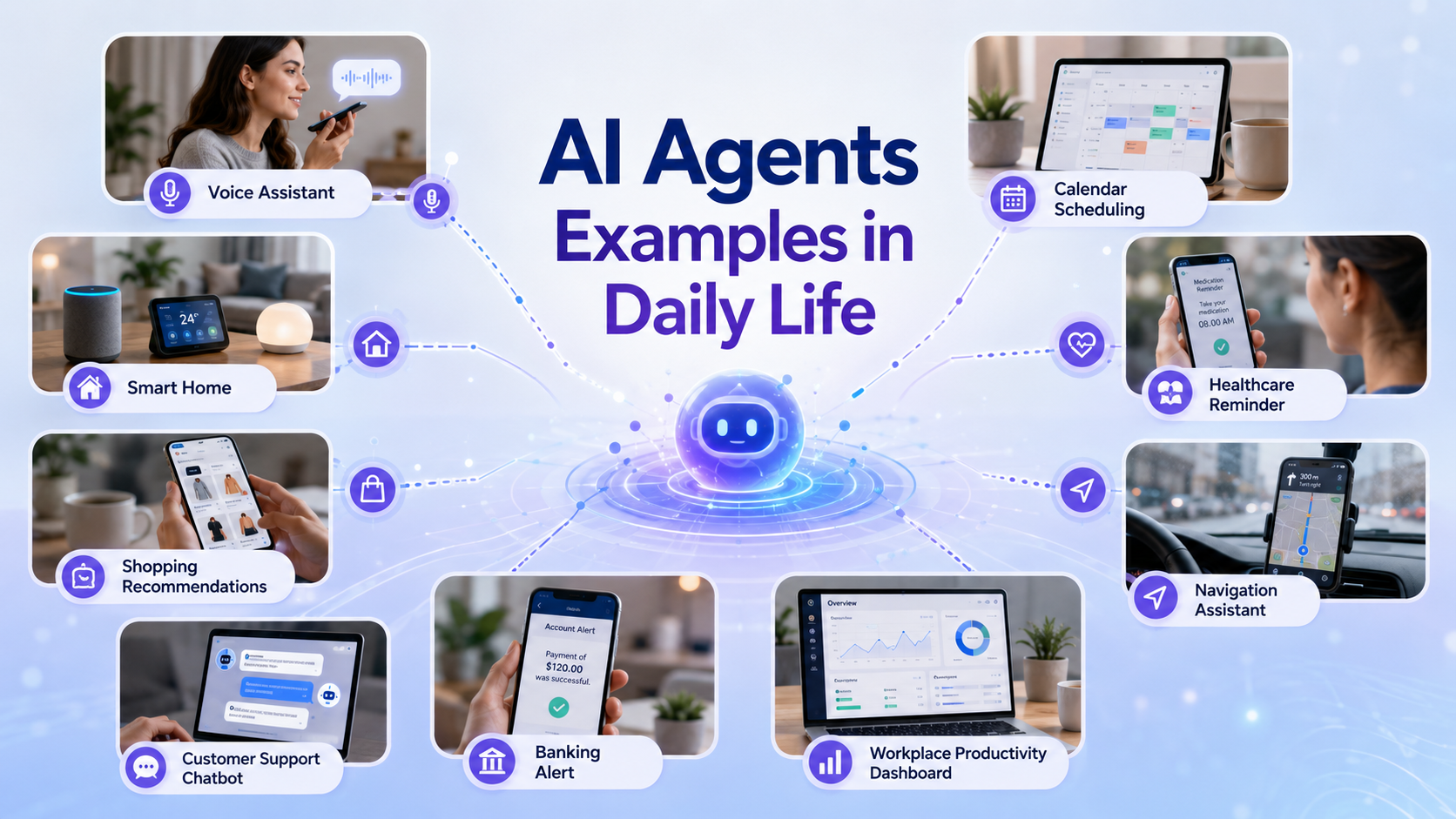
AI agents examples in daily life are becoming more common as artificial intelligence moves from simple answers to real task automation. From smart homes and voice assistants to online shopping, healthcare reminders, navigation apps, customer support, and workplace productivity tools, AI agents are now helping people complete everyday tasks faster and smarter.
Google Cloud defines AI agents as software systems that use AI to pursue goals and complete tasks on behalf of users, often using reasoning, planning, memory, and decision-making abilities. AWS also explains that AI agents help simplify and automate complex tasks by following a workflow to complete assigned goals.
In simple words, AI agents are designed to do more than answer. They can help act. This is why people now see AI agents examples in daily life through smartphones, smart homes, online shopping, customer support, education, healthcare, work tools, and business automation.
What Are AI Agents?
AI agents are artificial intelligence systems that can perform tasks on behalf of a person, business, or software system. IBM describes an AI agent as a system or program that can autonomously perform tasks for a user or another system.
A basic AI tool may only respond when someone gives it a prompt. An AI agent can go further. It may collect information, compare options, make a recommendation, update a record, send a reminder, or complete part of a workflow.
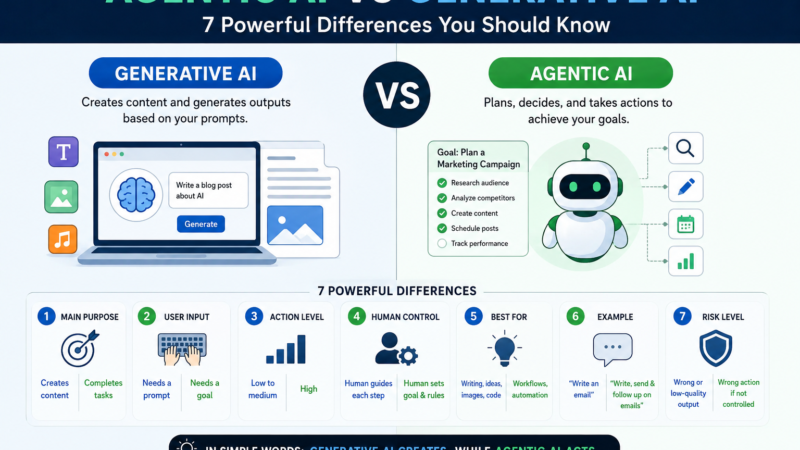
For example, a regular chatbot may answer, “Here are some good meeting times.” An AI agent may check a calendar, find available slots, suggest the best time, create the invite, and notify participants after approval. agentic AI vs generative AI
That is the main difference. AI agents are more goal-focused and action-oriented. AI agents use AI to pursue goals and complete tasks
Why AI Agents Are Becoming Common in Daily Life
AI agents are becoming common because people want technology that saves time, reduces repeated work, and helps them make faster decisions. Instead of using ten different apps manually, users want AI systems that can connect with tools and complete tasks more smoothly.
The rise of agentic AI has made this shift more important. AWS describes agentic AI as an autonomous AI system that can act independently to achieve predetermined goals. This does not mean AI agents should work without human control. It means they can support users by handling steps that were previously manual.
This is why AI agents examples in daily life are important for students, employees, business owners, marketers, shoppers, homeowners, and professionals. These agents can support everyday routines without requiring advanced technical knowledge. Agentic AI can plan and execute tasks
15 AI Agents Examples in Daily Life
Below are practical AI agents examples in daily life that show how this technology is already being used across common situations.
1. AI Agents in Virtual Assistants
Virtual assistants are one of the most common AI agents examples in daily life. Assistants on phones, smart speakers, and computers can answer questions, set reminders, send messages, search the web, control devices, and help users organize their day.
A simple assistant may only respond to voice commands, but a more advanced AI agent can understand context. For example, it may remind a user to leave early for a meeting after checking traffic, calendar time, and location.
This shows how everyday AI agents can combine information from different sources to complete a useful task. AI Transformation Is a Problem of Governance, Not Just Technology
2. AI Agents in Smart Homes
Smart home systems are another strong example of AI agents in daily life. These systems can manage lights, thermostats, cameras, locks, appliances, and security alerts.
For example, a smart home AI agent may learn when a person usually returns home and adjust the temperature before arrival. It may also turn off unused lights, detect unusual movement, or notify the homeowner when a door is left unlocked.
These agents help improve comfort, safety, and energy efficiency by making small decisions based on user behavior and real-time data.
3. AI Agents in Online Shopping
Online shopping platforms use AI agents to recommend products, compare prices, personalize offers, and improve the buying experience. When a customer browses products, an AI agent can analyze interests, previous purchases, ratings, and budget range to suggest better options.
For example, if someone searches for a laptop, the shopping platform may recommend models based on work needs, reviews, price, and performance. Some AI shopping assistants can also track price drops or suggest alternatives.
This is one of the most visible AI agents examples in daily life because online buyers interact with recommendation systems almost every day.
4. AI Agents in Customer Support
AI customer service agents are now used by many websites, apps, banks, eCommerce stores, and service companies. These agents can answer common questions, check order status, guide users through troubleshooting, and create support tickets.
A simple chatbot may give a fixed answer. A more advanced AI customer support agent can understand the problem, check customer data, suggest a solution, escalate the issue, and update the support record.
This makes customer support faster for users and more efficient for businesses.
5. AI Agents in Email Management
Email is a major part of daily work, and AI agents can help users manage it better. An email AI agent can summarize long threads, identify important messages, draft replies, sort emails, and remind users to follow up.
For example, a professional may receive dozens of emails daily. An AI email assistant can highlight urgent messages, draft polite responses, and suggest calendar actions when a meeting request appears.
This example shows how AI agents in daily life can reduce mental load and help users stay organized.
6. AI Agents in Calendar Scheduling
AI scheduling agents are useful for meetings, appointments, interviews, and personal planning. These agents can check availability, suggest open time slots, send invites, and update calendar events.
For example, instead of manually asking everyone for availability, an AI scheduling agent can compare calendars and find the best meeting time. In business settings, this saves time and reduces back-and-forth communication.
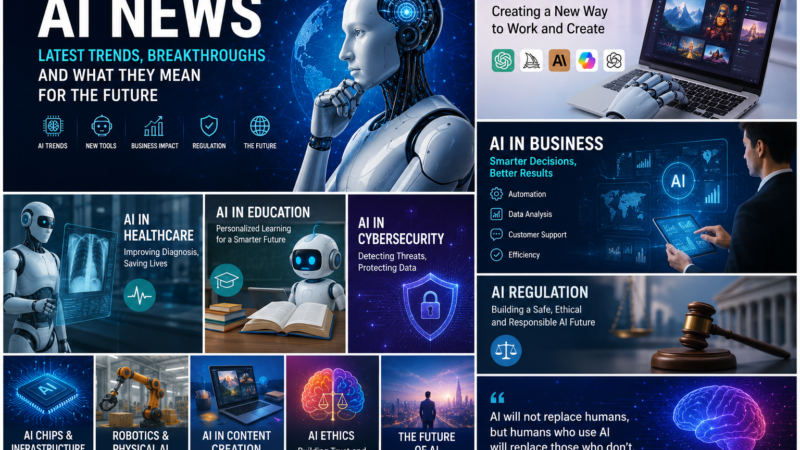
This is one of the most practical AI agents examples in daily life for office workers and remote teams.AI News: Latest Artificial Intelligence Trends and Updates
7. AI Agents in Education
AI agents are also changing the way students learn. Educational AI agents can explain difficult topics, create study plans, quiz students, give feedback, and recommend learning resources.
For example, a student struggling with math may use an AI tutor that identifies weak areas, explains the concept in simpler language, and gives practice questions. A language learner may use an AI agent to practice conversation and correct grammar.
AI agents in education do not replace teachers, but they can provide personalized support outside the classroom.
8. AI Agents in Healthcare Support
AI agents are increasingly used in healthcare support, especially for reminders, appointment booking, symptom checking, patient communication, and administrative tasks. They can help patients remember medication, schedule visits, and understand basic health information.
For example, a healthcare assistant may remind a patient to take medicine or help book a follow-up appointment. In clinics, AI agents can help staff organize patient messages and reduce repetitive administrative work.
However, healthcare-related AI agents should always be used carefully. They can support basic tasks, but medical decisions should remain with qualified healthcare professionals.
9. AI Agents in Fitness and Wellness Apps
Fitness apps often use AI agents to create workout plans, track progress, suggest diet improvements, and adjust recommendations based on user behavior.
For example, if a user misses workouts for several days, a fitness AI agent may adjust the plan and suggest a lighter routine. If the app tracks sleep, steps, and activity, it may recommend better recovery habits.
This is a helpful example of how AI agents in daily life can support personal goals and healthier routines.
10. AI Agents in Banking and Finance
Banking apps and finance tools use AI agents to detect suspicious activity, categorize spending, suggest budgets, and send alerts. These agents help users manage money with less manual effort.
For example, a banking AI agent may notify a user about an unusual transaction, remind them about a bill, or show where most of their monthly spending is going.
In personal finance, AI agents can make financial information easier to understand. Still, users should review important money decisions themselves before taking action.
11. AI Agents in Travel Planning
Travel planning is another popular area where AI agents can help. A travel AI agent may compare flights, suggest hotels, organize itineraries, check weather, estimate travel time, and recommend local attractions.
For example, a user may ask for a weekend trip plan. A basic AI tool can suggest places. An AI agent can go further by organizing a schedule, comparing travel options, and creating a step-by-step plan.
This is one of the best AI agents examples in daily life because it shows how AI can support a full process instead of giving one answer.
12. AI Agents in Navigation and Traffic Apps
Navigation apps use AI systems to analyze traffic, suggest faster routes, estimate arrival times, and warn drivers about delays. These features work like everyday AI agents because they process real-time data and guide users toward a goal.
For example, if there is heavy traffic on the usual route, the app may suggest a better road. If a user is driving to work, the system can estimate delays and recommend leaving earlier.
This daily use of AI helps people save time and make better travel decisions.
13. AI Agents in Workplace Productivity
Workplace productivity tools are among the fastest-growing areas for AI agents. These agents can summarize meetings, create task lists, organize notes, prepare reports, analyze documents, and support project management.
For example, after a team meeting, an AI agent may summarize key points, identify action items, assign tasks, and create follow-up reminders.
This is especially useful for remote teams, managers, marketers, developers, writers, and business owners who handle many tasks daily.
14. AI Agents in Content Creation
Content creators, bloggers, marketers, and social media teams use AI agents to plan topics, generate outlines, analyze trends, draft content, and repurpose posts.
For example, a content AI agent may research a topic, suggest headings, create a first draft, recommend keywords, and prepare social captions. Human editing is still important, but the agent can speed up the creative workflow.
This is one of the most common AI agents examples in daily life for digital workers and online businesses.
15. AI Agents in Cybersecurity
Cybersecurity tools use AI agents to monitor systems, detect unusual activity, flag threats, and help security teams respond faster. Google Cloud notes that agents are useful for real-time problem solving, external data use, and knowledge-intensive workflow automation.
For example, an AI security agent may detect a suspicious login attempt, alert the security team, block risky activity, or suggest the next investigation step.
This type of AI agent is especially important for businesses because cyber threats can move quickly and require fast action.
AI Agents vs Regular Chatbots
Many people confuse AI agents with regular chatbots, but they are not always the same. A chatbot usually responds to a message. An AI agent can work toward a goal.
A chatbot might answer, “Your order is delayed.” An AI agent might check the order, find the reason for the delay, create a support ticket, notify the customer, and schedule a follow-up.
This is why AI agents examples in daily life are more advanced than basic chatbot examples. AI agents can connect with tools, use context, and complete more steps.
Benefits of AI Agents in Daily Life
AI agents can make daily tasks easier, faster, and more organized. Their biggest benefit is reducing repeated manual work.
Key benefits include:
- Faster task completion
- Better personal organization
- More personalized recommendations
- Less repetitive work
- Improved customer service
- Smarter scheduling
- Better workflow automation
- Faster research and decision support
For businesses, AI agents can improve productivity. For individuals, they can simplify daily routines.
Risks and Privacy Concerns
AI agents are useful, but they also create risks. Because some agents can access data, use tools, and take actions, privacy and safety are important.
Common concerns include incorrect actions, data misuse, weak security, over-automation, and lack of human review. If an AI agent sends a message, changes a record, or makes a recommendation, the user should understand what the agent is doing and why.
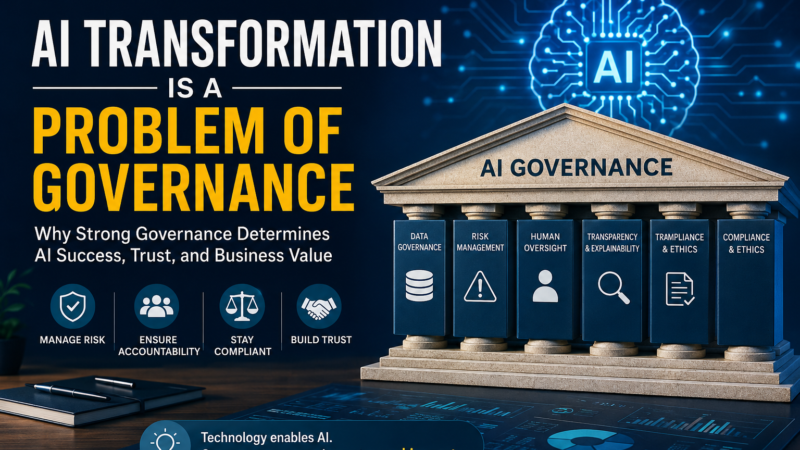
The safest approach is to use AI agents with clear permissions, human approval for sensitive actions, and strong privacy controls.Responsible AI principles
Future of AI Agents in Everyday Life
The future of AI agents will likely be more personal, connected, and action-focused. Instead of using separate tools for every task, users may rely on AI agents that can work across apps, calendars, email, documents, shopping platforms, and business systems.
In the future, everyday AI agents may help people plan schedules, manage finances, support learning, organize work, monitor health routines, and automate business tasks.
However, human judgment will remain important. AI agents can support decisions, but people still need to review sensitive tasks, protect personal data, and use AI responsibly.
Conclusion
AI agents examples in daily life show how artificial intelligence is becoming more useful, practical, and action-oriented. From virtual assistants and smart homes to online shopping, education, healthcare support, travel planning, productivity, and cybersecurity, AI agents are already helping people complete tasks faster.
The main value of AI agents is not only answering questions. Their value comes from helping users move from idea to action. They can understand goals, plan steps, use tools, and support real workflows.
As more people and businesses adopt AI, understanding AI agents examples in daily life will become important for choosing the right tools, improving productivity, and using artificial intelligence safely. AI agents are not just a future concept. They are already becoming part of everyday technology.
FAQs
What are AI agents in simple words?
AI agents are software systems that use artificial intelligence to complete tasks for users. They can understand goals, make decisions, use tools, and support workflows.
What are some AI agents examples in daily life?
Common AI agents examples in daily life include virtual assistants, smart home systems, shopping recommendations, customer support bots, email assistants, scheduling tools, fitness apps, banking alerts, and navigation apps.
How are AI agents different from chatbots?
A chatbot mainly answers questions. An AI agent can work toward a goal, use tools, remember context, and complete multi-step tasks.
Are AI agents used in business?
Yes, businesses use AI agents for customer support, sales follow-ups, reports, scheduling, cybersecurity monitoring, data analysis, and workflow automation.
Are AI agents safe to use?
AI agents can be safe when they have clear permissions, privacy controls, human approval, and secure access to data. Users should avoid giving sensitive access to untrusted tools.
Can AI agents replace humans?
AI agents can automate repetitive tasks, but they should not fully replace human judgment. People are still needed for strategy, creativity, ethics, decision-making, and quality control.