Freelancing Basics Guide for Beginners
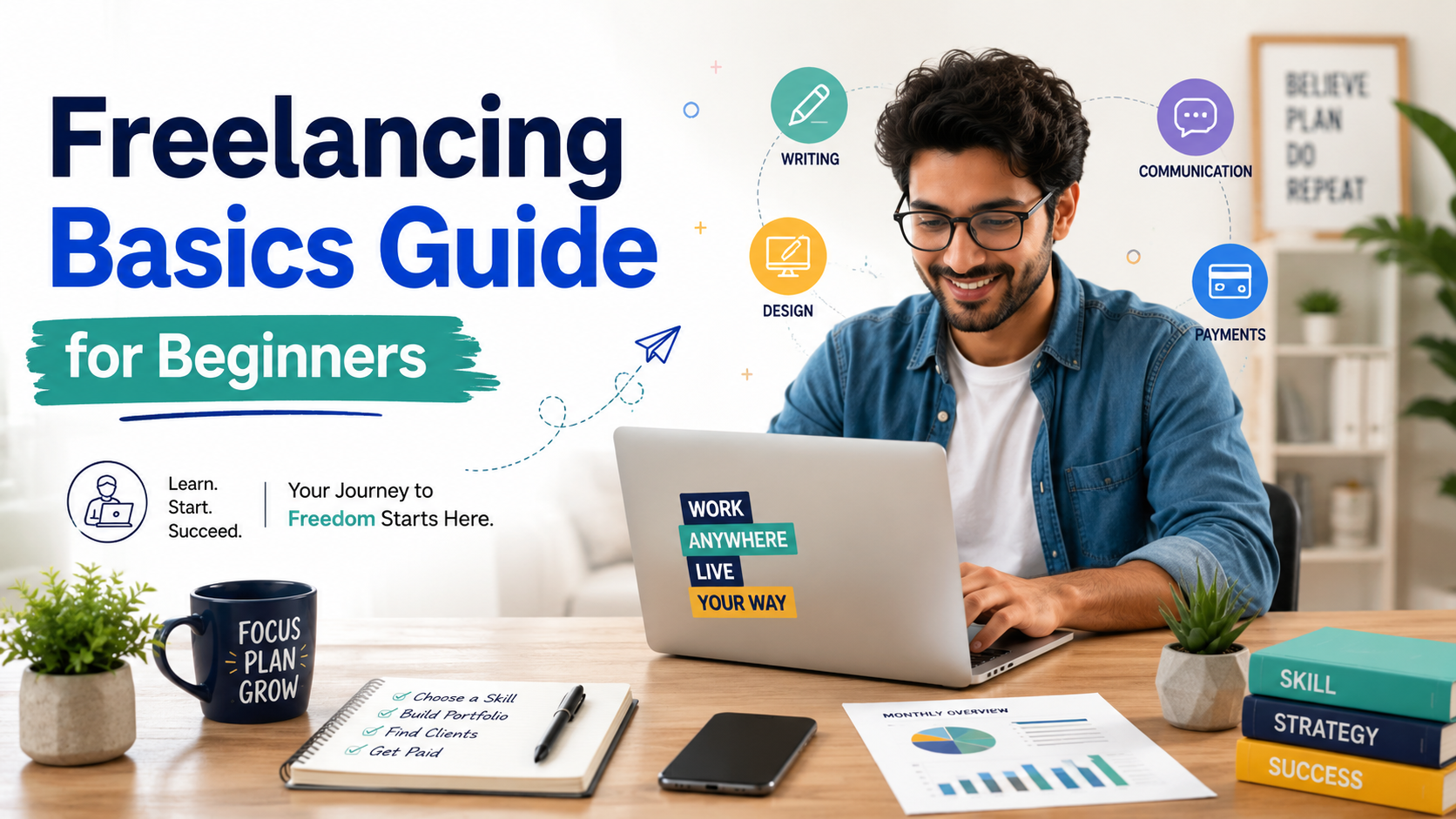
Freelancing has become one of the most popular ways for beginners to start earning online, build professional skills, and work with clients from different parts of the world. Many students, job seekers, professionals, and small business owners are now exploring freelancing because it gives them flexibility, independence, and the chance to grow at their own pace. This work from home tips explains the important steps every beginner should understand before starting a freelance career.
Freelancing is not just about creating an account on a platform and waiting for clients. It requires the right skill, proper communication, a strong profile, patience, and consistent improvement. When beginners understand the basics clearly, they can avoid common mistakes and build a better foundation for long-term success.
What Is Freelancing?
Freelancing means working independently for different clients instead of being employed by one company full-time. A freelancer offers services based on skills, completes projects, and gets paid according to the agreed work.
For example, a freelancer can provide services like content writing, graphic design, video editing, website development, SEO, social media management, virtual assistance, data entry, translation, or digital marketing. The client gives the task, the freelancer completes it, and payment is made based on the project, hourly rate, or monthly agreement.
The biggest advantage of freelancing is flexibility. You can work from home, choose your services, decide your working hours, and select the type of clients you want to work with. However, freelancing also requires discipline because you are responsible for finding clients, managing deadlines, and delivering quality work.
Why Freelancing Is a Good Option for Beginners
Freelancing is a good option for beginners because it does not always require a big investment. In many cases, you only need a laptop, internet connection, and a skill that solves a problem for clients. Beginners can start small, take simple projects, build experience, and slowly move toward higher-paying work.
Another benefit is that freelancing helps you learn real-world business skills. You learn how to communicate with clients, understand project requirements, manage time, solve problems, and present your work professionally. These skills are valuable not only for freelancing but also for jobs and business growth.
Freelancing also allows you to test different skills. For example, if you start with content writing, you may later learn SEO, blogging, email marketing, or copywriting. This way, your services can grow over time.
Best Freelancing Skills for Beginners
Choosing the right skill is one of the most important steps in freelancing. A beginner should select a skill based on interest, learning ability, market demand, and available time.
Some beginner-friendly freelancing skills include:
Content Writing
Content writing is suitable for people who can write clear, helpful, and engaging content. Freelance writers create blog posts, website content, product descriptions, social media captions, and articles.
Graphic Design
Graphic design is useful for creating logos, banners, social media posts, business cards, and marketing materials. Beginners can start with simple design tools and improve with practice.
Social Media Management
Many businesses need help managing Facebook, Instagram, LinkedIn, and TikTok accounts. A social media freelancer can create posts, schedule content, reply to comments, and help improve online presence.
SEO Services
SEO means helping websites rank better on search engines. Beginners can learn keyword research, on-page SEO, content optimization, and basic technical SEO.
Website Design
Website design is a strong freelancing skill. Many small businesses need simple websites, landing pages, or WordPress websites. This skill may take time to learn, but it can become highly valuable.
Virtual Assistance
Virtual assistants help clients with emails, data entry, research, scheduling, file management, and basic admin tasks. This is a good option for organized beginners.
How to Start Freelancing Step by Step
Starting freelancing becomes easier when you follow a proper process instead of trying random methods.
1. Choose One Skill First
Many beginners make the mistake of learning too many skills at once. It is better to choose one main skill first and become confident in it. For example, if you choose content writing, focus on learning article writing, blog structure, grammar, research, and SEO basics.
Once you gain confidence, you can add related skills later.
2. Learn the Basics Properly
Before offering services, learn the basic concepts of your skill. You can use free tutorials, blogs, YouTube videos, online courses, and practice projects. Do not wait to become perfect, but make sure you understand the basic workflow.
For example, if you want to offer SEO services, learn what keywords are, how headings work, how meta titles are written, and how content is optimized learn freelance skills online.
3. Create Sample Work
Clients usually want to see proof of your ability. If you do not have previous client work, create sample projects. A content writer can write 3 to 5 sample articles. A designer can create sample social media posts. A website designer can create demo landing pages.
Sample work builds trust and makes your profile stronger.
4. Build a Simple Portfolio
A portfolio is a collection of your best work. It helps clients understand what you can do. Your portfolio does not need to be complicated. You can use Google Drive, a simple website, Behance, LinkedIn, or a PDF file.
Your portfolio should include your name, services, samples, contact details, and a short introduction.
5. Create Freelancing Profiles
After preparing your skill and samples, create profiles on freelancing platforms. Some popular types of platforms include general freelance marketplaces, job boards, and social media platforms.
Your profile should clearly explain:
- What service you offer
- Who you help
- What result you can provide
- Your experience or sample work
- Why clients should trust you
Avoid writing a profile that sounds too general. Be specific and professional.
6. Start Applying for Small Projects
In the beginning, focus on small and simple projects. These projects help you gain confidence, reviews, and client experience. Do not only chase high-budget work at the start. Your first goal should be learning client communication and completing projects successfully.
When sending a proposal, do not copy-paste the same message to every client. Read the job post carefully and write a short, relevant message explaining how you can help.
7. Communicate Professionally
Good communication is one of the most important freelancing skills. Always understand the client’s requirements before starting work. Ask clear questions, confirm deadlines, and explain what you will deliver.
Professional communication helps avoid confusion and builds client trust. Even if you are a beginner, clear communication can make you look more reliable.
8. Deliver Quality Work on Time
Freelancing success depends on trust. If you promise a deadline, try your best to complete the work on time. If there is a delay, inform the client early. Always review your work before sending it.
Quality work can help you get repeat clients, positive reviews, and referrals.
Common Mistakes Beginners Should Avoid
Many new freelancers fail because they start without planning. One common mistake is offering too many services without becoming good at one. Another mistake is using copied proposals that do not match the client’s project.
Some beginners also set prices too low and then struggle to manage time. Low pricing may help at the start, but it should not be so low that the work becomes stressful. Another mistake is not creating samples. Without proof of work, clients may not feel confident hiring you avoid remote work scams.
Beginners should also avoid making promises they cannot fulfill. It is better to be honest about what you can deliver instead of accepting work that is beyond your current ability.
How Much Can a Beginner Freelancer Earn?
Freelance income depends on skill, experience, project type, client budget, and consistency. In the beginning, earnings may be low because you are building your profile and learning the process. However, with better skills, strong samples, and good reviews, your income can grow over time.
The best approach is to focus on skill improvement first. When your work quality improves, you can increase your rates and attract better clients.
Tips to Grow as a Freelancer
To grow as a freelancer, keep improving your skill and learn from every project. Save your best work in your portfolio. Ask satisfied clients for feedback or testimonials. Try to build long-term relationships instead of only looking for one-time projects.
You should also learn basic personal branding. A professional LinkedIn profile, clean portfolio, and helpful posts can attract clients outside freelancing platforms.
Most importantly, stay consistent. Freelancing takes time. Some beginners give up too early because they do not get clients immediately. Success usually comes when you keep learning, applying, improving, and building trust.
Conclusion
Freelancing is a practical way for beginners to start online work, earn income, and build valuable professional skills. However, it requires patience, learning, communication, and consistency. By choosing one skill, creating sample work, building a portfolio, applying for small projects, and delivering quality work, beginners can start their freelance journey with more confidence online business ideas for beginners.
This freelancing basics guide is a simple roadmap for anyone who wants to understand how freelancing works and how to begin properly. The key is to start small, improve daily, and treat freelancing like a real professional career.
FAQs
What is freelancing in simple words?
Freelancing means working independently for clients and getting paid for specific services or projects instead of working as a full-time employee for one company.
Which freelancing skill is best for beginners?
Content writing, graphic design, virtual assistance, social media management, SEO, and data entry are common beginner-friendly freelancing skills.
Can I start freelancing without experience?
Yes, you can start freelancing without client experience by learning a skill and creating sample work. Samples help clients understand your ability.
How do freelancers get clients?
Freelancers get clients through freelancing platforms, LinkedIn, social media, referrals, job boards, cold emails, and personal websites.
Is freelancing easy for beginners?
Freelancing is simple to start but not always easy. Beginners need patience, skill practice, communication, and consistency to get results.
Do I need money to start freelancing?
You do not need a large investment to start freelancing. In most cases, you need a skill, internet connection, laptop or computer, and a basic portfolio.