
World Emoji Day: Meaning, History and Fun Ways to Celebrate
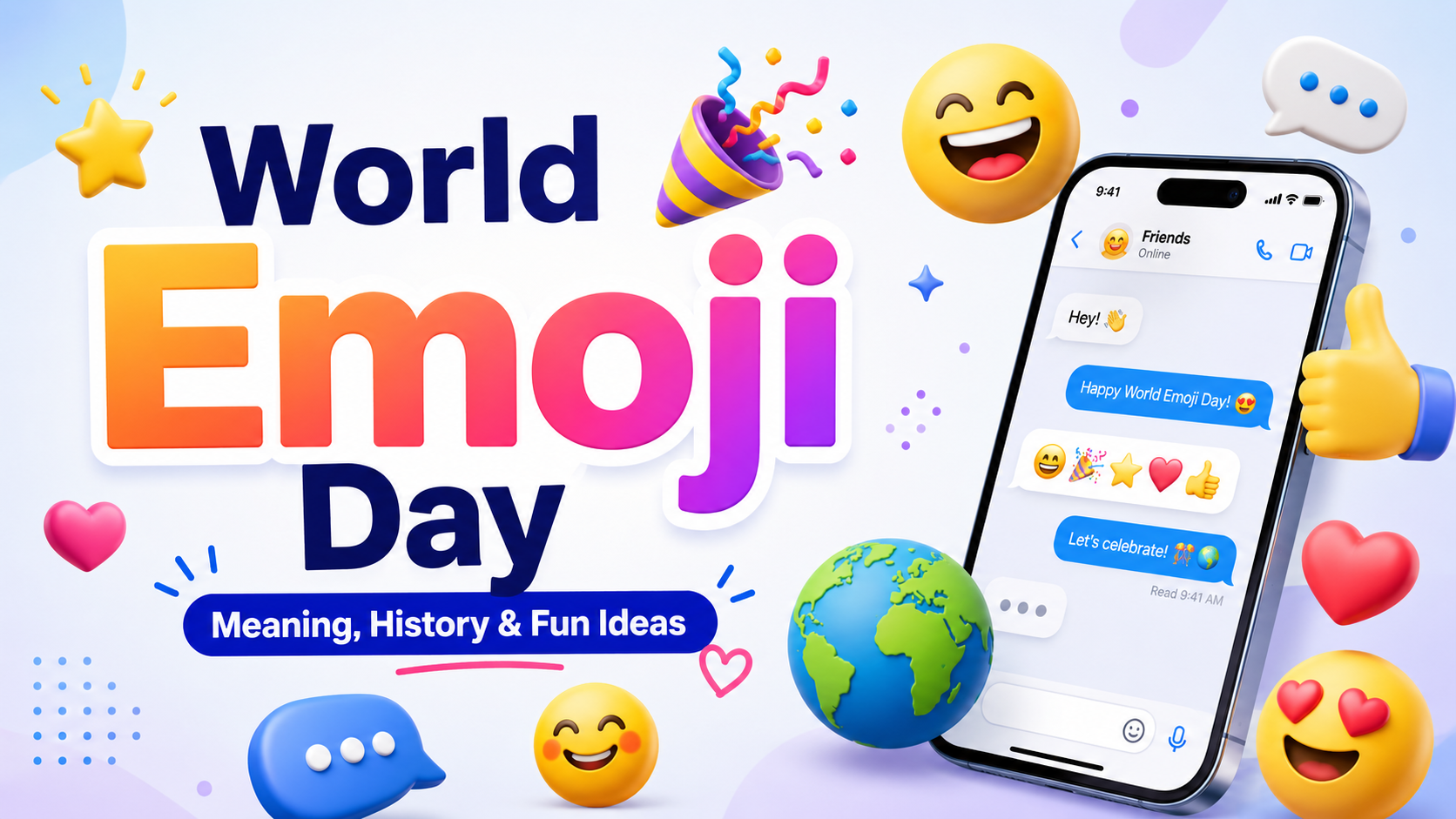
World Emoji Day is celebrated every year on July 17 to recognize the role emojis play in modern digital communication. From simple smiley faces to hearts, flags, animals, food, gestures, and reactions, emojis have become a daily part of how people express feelings online.
Today, emojis are used in text messages, social media captions, emails, comments, brand campaigns, online chats, and even professional communication. A single emoji can make a message feel friendly, emotional, funny, supportive, or more personal. That is why World Emoji Day is more than just a fun internet trend. It is a celebration of how visual symbols help people communicate across languages and cultures.
This guide explains what World Emoji Day is, why it is celebrated on July 17, who created it, how emojis became popular, and how students, families, creators, and businesses can celebrate it in simple and creative ways.
What Is World Emoji Day?
World Emoji Day is an unofficial global celebration of emojis. It is a day when people, brands, social media users, and tech platforms celebrate the small digital icons that have changed the way we communicate.
Emojis are used to show emotions, reactions, objects, activities, places, weather, animals, food, professions, and many other ideas. Instead of writing long sentences, people often use emojis to make messages shorter and more expressive official World Emoji Day website.
For example, a laughing emoji can show humor, a heart emoji can show love, and a thumbs-up emoji can show approval. These small icons can quickly add tone to a message, which is especially useful in online communication where facial expressions and voice tone are missing.
When Is World Emoji Day?
World Emoji Day is celebrated every year on July 17. The date does not change, which makes it easy to remember.
Many people search for World Emoji Day in July because they want to know its meaning, history, social media ideas, captions, quizzes, and fun ways to celebrate. It is also a popular day for brands and tech companies to share emoji-related updates, campaigns, and creative posts.
Why Is World Emoji Day Celebrated on July 17?
World Emoji Day is celebrated on July 17 because the calendar emoji commonly displays July 17. This detail made July 17 the perfect date for a global emoji celebration.
The date has a special connection with the calendar emoji, which is why it became the symbolic day for celebrating all emojis. Over time, July 17 became widely recognized online as World Emoji Day.
This is one reason the day feels unique. It is not based on a traditional holiday system. Instead, it comes from digital culture and the way people use technology every day.
Who Created World Emoji Day?
World Emoji Day was created by Jeremy Burge, the founder of Emojipedia, in 2014. Emojipedia is one of the most popular online resources for emoji meanings, updates, designs, and emoji-related news.
The idea behind World Emoji Day was simple: people use emojis every day, so there should be one day to celebrate them. Since then, the day has grown into a global online event.
Every year, people use hashtags, create emoji games, share favorite emojis, publish emoji facts, and post creative content around World Emoji Day.
Quick Facts About World Emoji Day
| Topic | Details |
|---|---|
| Event name | World Emoji Day |
| Date | July 17 |
| Type | Unofficial global celebration |
| Created by | Jeremy Burge |
| First celebrated | 2014 |
| Main theme | Celebrating emojis and digital expression |
| Popular activities | Emoji quizzes, captions, games, social posts, brand campaigns |
| Best for | Students, creators, businesses, families, social media users |
Why Emojis Are Important in Digital Communication
Emojis are important because they help people express emotions quickly. In face-to-face communication, people use facial expressions, gestures, and tone of voice. In online messages, those signals are missing. Emojis help fill that gap.
For example, the sentence “Okay” can feel serious, cold, or neutral. But “Okay 😊” feels more friendly. A simple emoji can change the tone of a message and make communication clearer digital communication skills.
Emojis also make messages more engaging. Social media posts with emojis often feel more visual and easier to scan. Businesses use emojis to make captions more friendly, while friends use them to make conversations more personal.
How Emojis Became Popular
Emojis started as small digital symbols, but they became popular as mobile messaging and smartphones grew. People wanted faster and more emotional ways to communicate. Emojis made texting more expressive and fun.
Over time, emoji keyboards became common on phones, social media platforms, and messaging apps. Today, users can choose from many categories, including smileys, people, animals, food, travel, objects, symbols, flags, and activities.
New emojis are also added over time to reflect modern culture, diversity, accessibility, and new ways people communicate online.
World Emoji Day and Social Media
Social media plays a big role in making World Emoji Day popular. Platforms like Instagram, X, Facebook, TikTok, LinkedIn, and YouTube are filled with emoji-themed posts on July 17.
People share their favorite emojis, create emoji challenges, post emoji captions, and ask followers to guess movies, songs, countries, or phrases using only emojis.
For creators and brands, World Emoji Day is a good opportunity to create light, fun, and shareable content. Since emojis are easy to understand, they work well for engagement.
Fun Ways to Celebrate World Emoji Day
There are many simple ways to celebrate World Emoji Day. You do not need a big event or complicated plan. A small creative activity is enough.
Here are some fun ideas Google Doodle games explained:
- Share your most-used emoji.
- Create a post using only emojis.
- Ask friends to guess a movie using emojis.
- Make an emoji quiz.
- Use emojis in your social media captions.
- Create an emoji story.
- Design an emoji-themed poster.
- Ask followers which emoji describes their mood.
- Make an emoji-based classroom activity.
- Learn the meaning of emojis you use often.
These activities make World Emoji Day fun for students, families, creators, and online communities.
World Emoji Day Quiz Ideas
Quiz-style content works very well for World Emoji Day because emojis are visual and interactive. You can create simple quizzes for blogs, classrooms, social media, or family activities.
Here are some quiz ideas:
Guess the Movie by Emoji
Use emojis to describe a movie and ask people to guess the title.
Example:
🦁👑 = The Lion King
Guess the Country by Emoji
Use flags, food, landmarks, or cultural symbols to represent countries.
Example:
🗽🍔🏈 = United States
Guess the Song by Emoji
Use emojis to represent popular song titles.
Example:
🌧️☔ = Rain-related song title
What Emoji Are You?
Ask personality-style questions and match users with an emoji result.
Example:
If you love helping others, your emoji could be 🤝.
If you love fun and energy, your emoji could be 🎉.
If you are calm and positive, your emoji could be 😊.
Quiz content can help increase engagement because people enjoy participating and sharing results.
World Emoji Day Ideas for Students
Teachers can use World Emoji Day as a fun digital literacy activity. Since students already understand emojis, it can be used to teach communication, expression, creativity, and online behavior.
Here are some classroom ideas:
- Ask students to write a short story using emojis.
- Let students explain the meaning of their favorite emoji.
- Create an emoji vocabulary activity.
- Ask students to translate emoji sentences into words.
- Discuss how emojis can change the tone of a message.
- Create a poster about responsible emoji use.
This makes World Emoji Day useful beyond entertainment. It can help students understand how digital communication works.
World Emoji Day Ideas for Businesses
Businesses can use World Emoji Day to connect with their audience in a friendly way. Since emojis are already popular in online communication, brands can use them to create fun and relatable posts.
Business ideas include:
- Ask customers to comment with their favorite emoji.
- Create an emoji-based poll.
- Post an emoji quiz related to your products or services.
- Share a “describe our brand using one emoji” post.
- Use emojis in a special offer caption.
- Create an emoji guide for your industry.
- Share a behind-the-scenes post with emoji reactions.
For example, a coffee shop can ask followers to describe their coffee mood using emojis. A digital marketing agency can ask which emoji describes a business goal: 📈, 💡, 🚀, or 🎯.
Should Businesses Use Emojis in Marketing?
Yes, businesses can use emojis in marketing, but they should use them carefully. Emojis can make posts more friendly, visual, and engaging, but too many emojis can make content look unprofessional or spammy.
The best approach is to use emojis where they add meaning. A few relevant emojis in social media captions can improve readability. Emojis can also help highlight important points, separate ideas, or add emotion.
However, businesses should avoid using emojis in serious messages where clarity matters more. For example, legal updates, crisis communication, or formal notices should be written clearly and professionally.
Common Emoji Mistakes to Avoid
One common mistake is using too many emojis in one message. This can make the content difficult to read.
Another mistake is using emojis without understanding their meaning. Some emojis may have different meanings in different cultures or online communities. A symbol that seems harmless to one person may be confusing or inappropriate to another.
Businesses should also avoid replacing important information with emojis. Emojis should support the message, not make it unclear.
Another mistake is using emojis in every professional message. Sometimes simple words are better, especially in formal communication.
Most Popular Emoji Categories
Emojis are divided into many categories. Some of the most popular include Unicode full emoji list:
- Smileys and emotions
- People and body gestures
- Animals and nature
- Food and drink
- Travel and places
- Activities and sports
- Objects
- Symbols
- Flags
Each category helps users communicate different ideas. Smileys are used for feelings, animals are used for fun or personality, food emojis are common in lifestyle content, and flags are used for countries and events.
How Emojis Help Across Languages
One of the best things about emojis is that they can be understood by people from different language backgrounds. A smile, heart, star, or thumbs-up can be recognized by many users even if they do not speak the same language.
This does not mean emojis always mean the same thing everywhere. Culture and context still matter. But emojis can make communication feel more universal and visual.
For global social media users, emojis make posts easier to understand and more engaging.
Are Emojis Always Clear?
Emojis are useful, but they are not always perfectly clear. The same emoji can look slightly different on different devices or platforms. An emoji on iPhone may look different on Android, Windows, or a social media app.
This can sometimes create confusion. A face emoji may look friendly on one platform but awkward or different on another. That is why users should be careful when using emojis in important communication.
For casual posts and fun messages, emojis are great. For serious or sensitive messages, words should come first.
Why World Emoji Day Still Matters
World Emoji Day still matters because emojis are now part of everyday digital life. They are not only fun symbols; they are part of how people express emotion, humor, identity, culture, and reaction online.
The day gives people a chance to think about how communication has changed. A few decades ago, people mostly used plain text in digital messages. Today, emojis help make messages more human and expressive.
World Emoji Day also reminds us that digital language keeps evolving. As new platforms, devices, and cultures shape communication, emojis continue to grow with them.
Final Thoughts
World Emoji Day is a fun and meaningful celebration of the small icons that help people express emotions online. Celebrated every year on July 17, it highlights how emojis have changed texting, social media, marketing, education, and everyday communication.
Whether you are a student, teacher, creator, business owner, or casual social media user, World Emoji Day is a great time to celebrate digital expression. You can share your favorite emoji, create a quiz, post a fun caption, or simply learn more about how emojis became part of modern communication.
In the end, World Emoji Day is not just about symbols on a screen. It is about connection, creativity, and the simple ways people make online conversations feel more human.
FAQs
What is World Emoji Day?
World Emoji Day is an unofficial global celebration of emojis and their role in digital communication. It is observed every year on July 17.
Why is World Emoji Day on July 17?
World Emoji Day is celebrated on July 17 because the calendar emoji commonly displays July 17, making it a meaningful date for emoji fans.
Who created World Emoji Day?
World Emoji Day was created by Jeremy Burge, the founder of Emojipedia, in 2014.
How can I celebrate World Emoji Day?
You can celebrate by sharing your favorite emoji, creating an emoji quiz, posting an emoji caption, playing emoji guessing games, or learning about emoji meanings.
Can businesses use World Emoji Day for marketing?
Yes, businesses can create fun social media posts, emoji quizzes, polls, captions, and customer engagement activities for World Emoji Day.
Are emojis the same on every device?
No, emojis can look slightly different on different platforms such as Apple, Google, Samsung, Microsoft, and social media apps.
Is World Emoji Day an official holiday?
World Emoji Day is not a government holiday. It is an unofficial digital celebration recognized online by emoji users, brands, and communities.







One thought on “World Emoji Day: Meaning, History and Fun Ways to Celebrate”