Google Earth Day Quiz: How to Play and What It Means
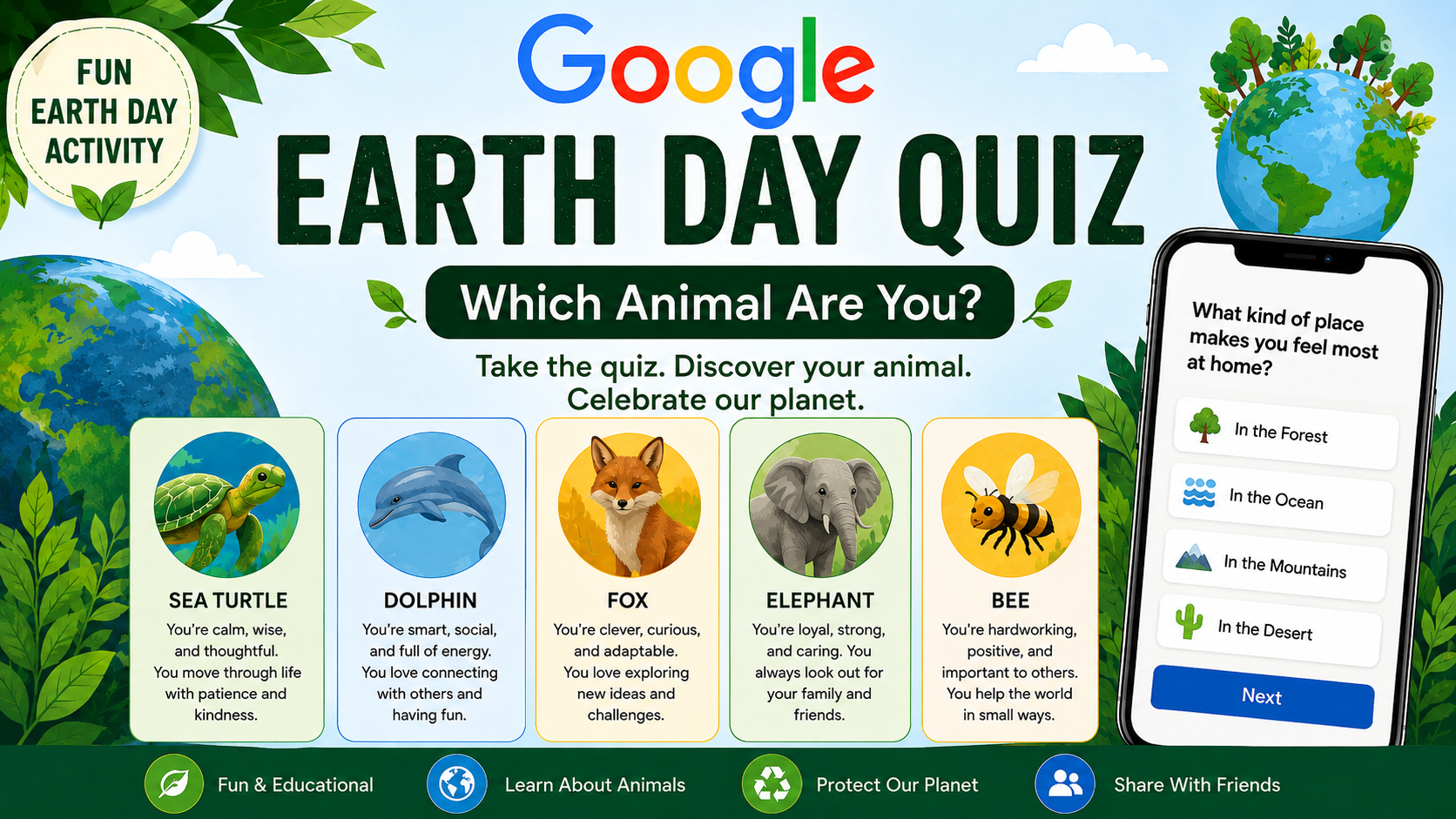
The Google Earth Day Quiz is a fun and educational online quiz that became popular because it connects personality-style questions with animals, nature, and environmental awareness. Many people search for it around Earth Day because they want to know how the quiz works, what animal result they may get, and why Google created an Earth Day-themed experience in the first place.
In simple words, the Google Earth Day Quiz is not a serious exam with right or wrong answers. It is more like a light personality quiz that matches your answers with an animal result. The main purpose is to make people curious about wildlife, biodiversity, and the importance of protecting the planet.
This guide explains what the Google Earth Day Quiz is, how to play it, what the animal results mean, why it became popular, and how students, teachers, families, and everyday users can use it as a simple Earth Day learning activity.
What Is the Google Earth Day Quiz?
The Google Earth Day Quiz is an interactive quiz connected with Google’s Earth Day Doodle. It became widely known as a “Which animal are you?” style quiz. Users answer a few simple questions, and based on their choices, the quiz gives an animal result Google Doodle Earth Day Quiz.
The result may show an animal that matches your personality, habits, or preferences in a playful way. For example, someone may get a rare, unusual, social, calm, or energetic animal depending on how they answer the quiz questions.
The quiz became popular because it was easy, fun, and shareable. Instead of only showing an Earth Day logo, Google used the quiz to encourage people to learn more about animals and the natural world.
Why the Google Earth Day Quiz Became Popular
The Google Earth Day Quiz became popular for three main reasons: it was simple, it was fun, and it connected people with nature.
Many online quizzes are popular because they give users a quick personal result. The Google Earth Day Quiz used that same idea but added an environmental theme. Instead of telling users what movie character they are, it told them which animal they might be.
This made the quiz more meaningful. After getting a result, many users became curious about their animal. They searched for facts, habitats, behavior, and conservation information. That curiosity is exactly what makes the quiz useful for Earth Day.
It also worked well because it was easy to share. People could compare animal results with friends and family, making the quiz feel like a social activity.
Quick Overview of the Google Earth Day Quiz
| Feature | Details |
|---|---|
| Main topic | Earth Day, animals, nature, and personality |
| Quiz type | Fun personality-style quiz |
| Main keyword | google earth day quiz |
| Best for | Students, families, teachers, nature lovers, casual users |
| Purpose | Raise curiosity about animals and environmental awareness |
| Result style | Animal personality result |
| Difficulty | Easy |
| Best time to search | Around Earth Day, April 22 |
How to Play the Google Earth Day Quiz
Playing the Google Earth Day Quiz is usually simple. When the quiz is available or searchable, users can find it by searching for “Google Earth Day Quiz” or “Earth Day quiz” on Google.
The quiz may ask a few short questions about your personality, habits, or preferences. You choose the answers that feel closest to you. After completing the quiz, you receive an animal result.
Here is the basic process:
- Search for “Google Earth Day Quiz.”
- Open the quiz or related Google Doodle result.
- Answer the personality-style questions.
- Submit your answers.
- See your animal result.
- Read more about the animal and what it represents.
The quiz is not about winning. It is about learning something fun and connecting it with Earth Day.
Is the Google Earth Day Quiz Available Every Year?
Many users think the Google Earth Day Quiz appears every year, but it is better to understand it carefully. Google often creates special Doodles for Earth Day, but the exact format can change. Some years may include quizzes, some may include animations, slideshows, videos, or interactive educational features.
The popular animal personality quiz is strongly connected with Google’s 2015 Earth Day Doodle. Later Earth Day Doodles used different formats, such as interactive slideshows about organisms and biodiversity.
So, if you search for the quiz and do not see the same version, it does not mean anything is wrong. Google’s Earth Day content can change from year to year.
What Kind of Questions Are in the Quiz?
The Google Earth Day Quiz usually includes light and simple personality-style questions. These questions are not difficult. They are designed to be fun and quick.
The quiz may ask about things like:
- How you spend your free time
- What kind of activity you enjoy
- How you behave in a group
- What type of environment you like
- Which answer best matches your personality
Based on your choices, the quiz matches you with an animal. The questions are playful, but they also create an opportunity to learn about different species.
What Do the Animal Results Mean?
The animal result is not a scientific personality test. It is a fun way to connect human traits with animal characteristics.
For example, a result may suggest that you are independent, social, curious, active, calm, rare, strong, or unusual. The animal result can make users curious about the animal’s real behavior, habitat, and importance in nature.
This is where the quiz becomes more useful. Instead of stopping at the result, users can search for more information about the animal. They can learn where it lives, what it eats, why it matters, and whether it faces environmental threats.
Does the Google Earth Day Quiz Have Correct Answers?
No, the Google Earth Day Quiz does not have correct or incorrect answers. It is not a school test or knowledge exam. It is a personality-style quiz, so your result depends on the answers you choose.
This is important because many people search for “Google Earth Day Quiz answers,” expecting a fixed answer key. But the quiz is not designed that way. Different answers lead to different animal results.
If your goal is to get a specific animal, you may try different answers. But if your goal is to enjoy the quiz properly, choose the answers that honestly match your personality.
Why Earth Day Matters
Earth Day is observed every year on April 22. It is a global reminder that people, communities, schools, businesses, and governments should pay attention to environmental protection Earth Day history.
Earth Day is about more than one day of celebration. It encourages people to think about clean air, clean water, wildlife protection, climate awareness, recycling, pollution, trees, oceans, and sustainable choices.
The Google Earth Day Quiz fits this purpose because it uses a simple online activity to make people curious about nature. A short quiz cannot solve environmental problems, but it can start a conversation.
How the Quiz Helps Students Learn
The Google Earth Day Quiz can be useful for students because it makes environmental learning more interesting. Instead of only reading facts from a textbook, students can take the quiz, get an animal result, and then research that animal.
Teachers can turn the quiz into a small classroom activity. For example, students can take the quiz and then write a short paragraph about their animal. They can explain where the animal lives, what makes it special, and what environmental issue affects its habitat.
This makes learning more interactive. Students are more likely to remember facts when they connect them with a fun activity.
How Teachers Can Use the Google Earth Day Quiz
Teachers can use the Google Earth Day Quiz as a warm-up activity for Earth Day lessons. It can be used in science, environmental studies, general knowledge, or classroom discussion.
Here is a simple classroom idea:
Ask students to take the quiz and note their animal result. Then ask each student to research three facts about that animal. After that, students can discuss why biodiversity matters and how human actions affect wildlife.
Teachers can also create a board where students place their animal results. This can become a fun classroom display for Earth Day.
How Families Can Use the Quiz at Home
Families can also use the Google Earth Day Quiz as a simple Earth Day activity. Parents and children can take the quiz together and compare animal results.
After the quiz, families can choose one small action for Earth Day. This may include planting a tree, reducing plastic use, cleaning a local area, saving water, recycling, or learning about local wildlife.
This makes the quiz more meaningful. It becomes not only a fun online activity but also a starting point for real-world action.
Google Earth Day Quiz and Environmental Awareness
The strongest value of the Google Earth Day Quiz is awareness. Many people do not think about biodiversity every day. A simple quiz can introduce them to animals they may not know.
When users get an animal result, they may search for that animal and learn something new. They may discover that an animal is endangered, has a unique habitat, or plays an important role in the ecosystem.
This is why interactive content can be powerful. It takes a serious topic and makes it easier for people to approach.
Google Earth Day Quiz vs Other Earth Day Quizzes
There are many Earth Day quizzes online. Some focus on environmental facts, recycling knowledge, climate change, oceans, animals, or sustainability. The Google Earth Day Quiz is different because it uses a personality-style format.
A normal Earth Day quiz may ask factual questions such as “When is Earth Day?” or “What does recycling help reduce?” The Google Earth Day Quiz is more personal and playful. It asks questions that lead to an animal match Google Sheets updates explained.
Both types of quizzes are useful. A factual quiz tests knowledge, while a personality quiz builds curiosity and engagement.
Best Earth Day Activities After Taking the Quiz
After taking the Google Earth Day Quiz, users can do more than share their animal result. They can turn the quiz into a learning activity or environmental action.
Here are simple ideas:
- Search facts about your animal result.
- Learn whether the animal is endangered.
- Find out where the animal lives.
- Read about its habitat.
- Reduce plastic waste for one day.
- Plant something at home.
- Join a local cleanup.
- Save water and electricity.
- Teach someone one fact about your animal.
- Make an Earth Day poster or social media post.
These small actions help connect the quiz with the real meaning of Earth Day.
Tips for Writing About Your Quiz Result
If you are a student or blogger, you can write a short paragraph about your Google Earth Day Quiz result. This can be a good Earth Day writing activity.
You can use this simple format:
“My Google Earth Day Quiz result was [animal name]. This animal is interesting because [fact]. It lives in [habitat]. One reason this animal matters is [reason]. To help protect nature, people can [simple action].”
This format is easy and educational. It helps users go beyond the quiz and learn something meaningful.
Why This Quiz Still Gets Search Interest
The Google Earth Day Quiz still gets search interest because it is simple, nostalgic, and connected with a global event. Every year around Earth Day, people search for Earth Day activities, Google Doodles, environmental quizzes, and classroom ideas.
The keyword also attracts users who want a quick activity. Some are students. Some are teachers. Some are families. Some are just curious because they remember the old Google Doodle.
This makes the topic useful for informational content, especially if the article explains the quiz clearly and adds educational value.
Common Mistakes People Make
One common mistake is thinking the quiz has fixed right answers. It does not. It is a personality quiz, so the result changes depending on your choices.
Another mistake is assuming the same quiz appears every year. Google may create different Earth Day Doodles, so the format can change.
A third mistake is taking the animal result too seriously. The quiz is meant to be fun and educational, not a real personality test.
The best way to enjoy it is to take the quiz, learn about your result, and use it as a reason to understand nature better.
Final Thoughts
The Google Earth Day Quiz is a simple but memorable way to celebrate Earth Day online. It combines personality-style questions with animals, biodiversity, and environmental curiosity. While it is not a serious test, it can help users learn about wildlife and think more about the planet.
For students, it can become a classroom activity. For families, it can become a fun Earth Day discussion. For nature lovers, it can be a starting point to learn about animals and conservation.
The best way to use the Google Earth Day Quiz is not just to get an animal result, but to learn what that animal teaches us about the natural world. Earth Day is a reminder that protecting the planet starts with awareness, and even a small quiz can help start that conversation.
FAQs
What is the Google Earth Day Quiz?
The Google Earth Day Quiz is a fun personality-style quiz connected with Google’s Earth Day Doodle. It matches users with an animal result based on their answers.
How do I play the Google Earth Day Quiz?
Search for “Google Earth Day Quiz” or “Earth Day quiz” on Google. If the quiz or related Doodle is available, answer the questions and view your animal result.
Does the Google Earth Day Quiz have correct answers?
No, it does not have correct or incorrect answers. It is a personality quiz, so your result depends on the choices you select.
Why does Google create Earth Day Doodles?
Google creates Earth Day Doodles to celebrate Earth Day and encourage users to learn more about nature, biodiversity, and environmental awareness.
Is the Google Earth Day Quiz available every year?
Not always in the same format. Google may create different Earth Day Doodles each year, including quizzes, animations, videos, or interactive learning features.
What should I do after taking the quiz?
After taking the quiz, learn about your animal result, research its habitat, and choose one simple Earth Day action such as recycling, saving water, planting, or reducing plastic use.